November 27, 2023

Ask ten energy experts where the sector is headed and you’ll get twelve different answers. That’s not me being cynical — that’s just the reality of an industry going through the kind of upheaval it hasn’t seen since the discovery of oil itself.
Some people are convinced we’re five years away from a solar-powered utopia. Others think fossil fuels will dominate for another half century. Most serious analysts sit somewhere in the messy middle, trying to read signals that keep changing every few months.
I’ve been watching this space for a while now. And what I keep coming back to is this: the energy transition is real, it’s moving faster than most people expected in some areas, and slower than almost everyone hoped in others. Both things are true at once.
This piece is my honest attempt to map out where things are actually heading. Not where we wish they were going. Not where the press releases say they’re going. Where the data, the money, and the politics are actually pointing.
And yes — we’re going to talk specifically about what this means for upstream oil and gas companies. Because they’re sitting in one of the most complicated positions in the entire energy ecosystem right now.
Here’s something that gets lost in a lot of energy coverage: transitions take time. Always have. Always will.
When the world shifted from wood to coal, it took decades. When it moved from coal to oil, same thing. We didn’t wake up one morning and coal was gone. It stuck around for generations while oil slowly took over.
The shift to clean energy is going to follow a similar pattern — except with more political pressure, more urgency, and more money involved than any previous transition in history.
What that means practically is that we’re going to have a long period — probably 20 to 30 years at minimum — where fossil fuels and clean energy coexist, compete, and sometimes complement each other. Wind and solar grow. Oil and gas shrink in some markets and hold steady or even grow in others. Hydrogen emerges. Nuclear makes a comeback. The grid gets smarter.
It’s not a clean narrative. But it’s the honest one.
For upstream oil and gas companies, this is actually important context. It means they’re not facing an extinction event next year. But it also means the pressure — from regulators, investors, and the public — is only going to increase. The window to adapt is open right now. It won’t stay open forever.
Follow the money. It’s an old piece of advice, but it works in energy just as well as anywhere else.
Global clean energy investment surpassed investment in fossil fuels for the first time in recent history. That’s a sentence worth sitting with for a moment. For the first time ever, more capital is flowing into clean energy than into oil, gas, and coal combined.
Solar attracted more investment than any other energy source. Offshore wind saw record funding. Battery storage investment roughly doubled in two years. Green hydrogen went from a fringe conversation to a serious infrastructure project in countries like Germany, Australia, Japan, and Saudi Arabia — yes, Saudi Arabia.
But here’s what the headlines often miss: oil and gas investment is also increasing. Not as fast as clean energy. But demand is still high, and supply needs to be maintained. Upstream oil and gas companies invested heavily in new exploration and production capacity in 2024 and 2025. The world still needs what they produce.
So the money story isn’t ‘clean energy is winning, fossil fuels are losing.’ It’s more like: both are attracting serious capital right now, for different reasons, serving different parts of a massive and growing global energy demand.
The difference is the trajectory. Clean energy investment is accelerating. Fossil fuel investment is holding steady but faces a long-term ceiling. That gap will widen over time.
Read Also- Advancements in Energy Production: What It Means for the Industry and the Environment
Okay, let’s get into the specifics. What technologies are actually going to shape the next ten years of energy?
I remember reading predictions from 2015 that said solar would reach cost parity with coal by 2025. At the time, it sounded optimistic. It happened by 2020 in most markets.
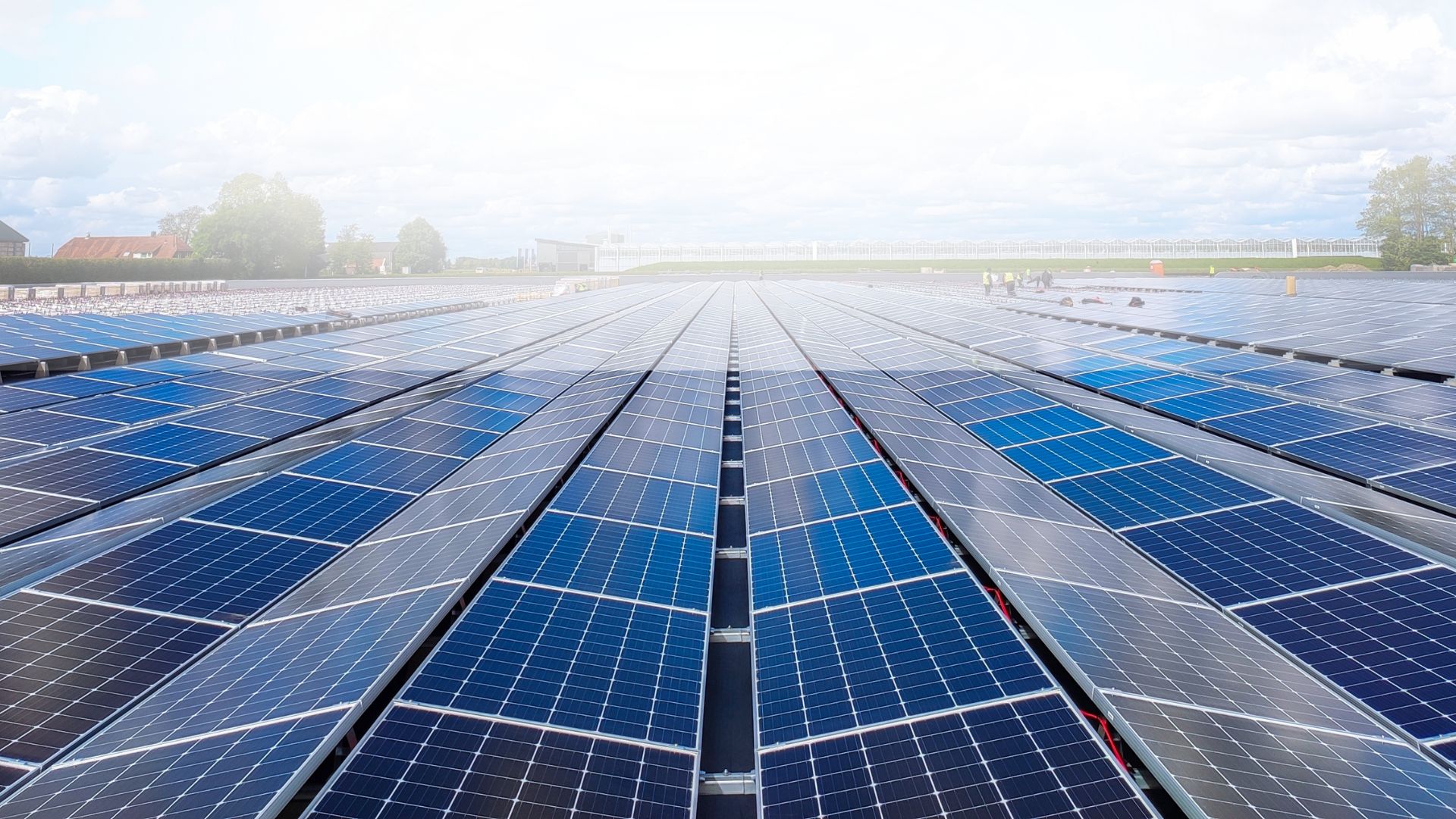
Solar keeps defying forecasts. Panel costs have dropped over 90% in the last fifteen years. Efficiency keeps climbing. New perovskite solar cell technology could push efficiency significantly higher still. Agrivoltaics — combining solar panels with farmland — is solving the land use problem in creative ways.
The bottleneck now isn’t the panels. It’s the grid infrastructure to connect all this new capacity. Transmission lines, substations, permitting processes — these are the unglamorous things that are actually slowing down the energy transition more than the technology is.
Offshore wind turbines are getting absurdly large. The latest generation stands taller than the Eiffel Tower. One turbine can power several thousand homes. And floating offshore wind — which doesn’t need to be anchored to the seabed — is opening up deeper waters that were previously unusable.
The UK, Denmark, Norway, and South Korea are leading in offshore wind. The US is trying to catch up after a rocky start. India is looking at it seriously. This technology is not experimental anymore — it’s commercial, it’s scaling, and it’s getting cheaper every year.
As I mentioned in a previous piece — hydrogen has been ‘almost ready’ for about four decades. But something genuinely feels different in 2026.
Green hydrogen, made using renewable electricity, is attracting billions in real infrastructure investment. Not just research grants. Not just pilot projects. Actual pipelines, storage facilities, and import terminals being built right now.
Hard-to-decarbonize sectors — steel, cement, shipping, aviation — are signing long-term offtake agreements for hydrogen. That’s the kind of market signal that says this is becoming real.
Interestingly, upstream oil and gas companies are well-positioned here. They already know how to handle high-pressure gases. They understand pipelines. They have the engineering talent. Some of the most credible hydrogen projects in the world right now are being developed by energy companies with upstream backgrounds.
I’ll be direct: we are not going to hit global climate targets without carbon capture at scale. That’s not a political statement — it’s what virtually every serious climate model shows.
CCUS — carbon capture, utilization, and storage — is still expensive. It’s not cheap enough to deploy everywhere yet. But costs are coming down. Government support in the US, EU, and UK is accelerating that cost reduction.
For upstream oil and gas companies specifically, CCUS is arguably the most strategically important technology to watch. It’s one of the few pathways that lets them continue core operations while significantly reducing their carbon footprint. Companies that build CCUS expertise now will have a real competitive advantage in a world where carbon has a price.
Five years ago, saying ‘nuclear is making a comeback’ would have gotten you skeptical looks in most energy circles. Not anymore.
Small modular reactors are moving from concept to construction. Microsoft has signed a power purchase agreement for nuclear energy. Data center operators — desperate for reliable, around-the-clock clean power — are lining up for nuclear capacity. Governments in Poland, Romania, Canada, and the UK are actively building or planning new nuclear capacity.
Nuclear provides something no other clean energy source currently does: reliable, carbon-free baseload power 24 hours a day, 365 days a year. In a grid with lots of intermittent renewables, that’s genuinely valuable.
This one doesn’t get talked about enough in energy discussions. Artificial intelligence is changing how energy is produced, distributed, and consumed.
In upstream oil and gas operations, AI is being used to optimize drilling decisions, predict equipment failures before they happen, detect methane leaks in real time, and improve reservoir modeling. The efficiency gains are significant — we’re talking about reducing operational costs and emissions simultaneously.
On the grid side, AI is managing the increasingly complex task of balancing supply and demand across thousands of distributed energy sources. Smart grids, AI-powered demand response, and automated trading of electricity are making the system work better.
This is one area where the energy sector — including upstream oil and gas companies — has room to move fast and capture real value right now.
No overview of where the energy sector is headed would be complete without talking about geopolitics. Because energy and politics are inseparable.
The Russia-Ukraine war fundamentally changed Europe’s energy calculus. Countries that were dependent on Russian gas scrambled to find alternatives. LNG imports from the US and Qatar surged. Suddenly, energy security became a top political priority — right up there with, and sometimes above, climate goals.
That’s uncomfortable for some people to acknowledge, but it’s true. When a country’s citizens are facing energy poverty or industries are shutting down due to supply shortfalls, climate targets tend to take a back seat temporarily.
The lesson for upstream oil and gas companies? Energy security and energy transition are not opposites. Countries need both. Companies that can credibly deliver both — reliable supply AND a credible path to lower emissions — are going to be far more valuable than those focused on only one side of the equation.
Meanwhile, the Middle East is doing something interesting. Saudi Arabia, UAE, and Qatar are all investing massively in both oil expansion and clean energy simultaneously. They’re not treating this as an either/or choice. They’re hedging intelligently across multiple energy futures. That’s a strategy worth paying attention to.
Let me be direct here. I’m not going to dress this up.
Upstream oil and gas companies that operate exactly the same way in 2035 as they do today are going to face serious problems. Not because oil demand disappears overnight — it won’t. But because the regulatory environment, the investor environment, and the public expectations environment are all moving in one direction.
So what does ‘doing it differently’ actually look like?
Methane leaks, flaring, and the carbon footprint of drilling operations are all under a microscope right now. Satellite technology can now detect methane leaks from individual wells. Regulators in the US, EU, and Canada have tightened — and will continue to tighten — rules on emissions reporting and reduction.
The companies that get ahead of this aren’t just being environmentally responsible. They’re being smart. Catching methane leaks saves gas that would otherwise be wasted — that’s revenue. Reducing flaring improves community relations. Cutting operational emissions improves ESG scores, which affects access to capital.
It’s not charity. It’s good business.
Here’s something that doesn’t show up in enough strategic discussions: the energy workforce is aging. A significant portion of the technical talent in upstream oil and gas is approaching retirement age. Attracting younger engineers to the sector is increasingly difficult — partly because of how the industry is perceived, partly because clean energy companies are competing for the same talent.
The companies that figure out how to retain experienced workers while bringing in people who can work across traditional and new energy technologies are going to have a real advantage. This means investing in training, culture, and — yes — being honest with potential employees about what the company stands for and where it’s headed.
No single company can navigate this transition alone. The upstream oil and gas companies that are positioning themselves well are building partnerships — with technology companies, with clean energy developers, with governments, with universities.
Joint ventures on carbon capture projects. Partnerships with hydrogen developers. Research collaborations on next-generation well technology. These aren’t just PR exercises. They’re how companies build capabilities they don’t have internally and spread the financial risk of investing in uncertain technologies.
Geography matters enormously in energy. Let me flag a few regions that are going to be especially important to watch.
So where is the energy sector actually headed?
Here’s what I think, for what it’s worth: we are moving toward a genuinely more diverse energy system. Not a world where one fuel replaces another, but a world where multiple energy sources — solar, wind, nuclear, hydrogen, and yes, oil and gas — coexist in a more complex, more interconnected grid than anything we’ve had before.
Clean energy is growing fast. Faster than most forecasts predicted five years ago. But it’s growing alongside energy demand that is also growing faster than expected. That’s why the transition feels slower than it should, even when the numbers look impressive.
For upstream oil and gas companies, I genuinely believe there is a viable future — but only for the ones that take the current moment seriously. Not the ones that lobby against every new climate regulation and hope things stay the same. The ones that say: we understand what’s coming, we’re going to reduce our emissions now, we’re going to invest in the technologies that complement our core skills, and we’re going to be part of the solution — not just a problem to be solved.
That’s not easy. It requires real investment, real honesty with investors and employees, and real willingness to change. But the energy companies that manage it will come out of this transition stronger than they went in.
The ones that don’t? History has a way of being pretty clear about what happens to industries that miss their moment to adapt.
The moment is right now. And that, more than any specific technology or policy, is what I think is most important to understand about where the energy sector is headed.
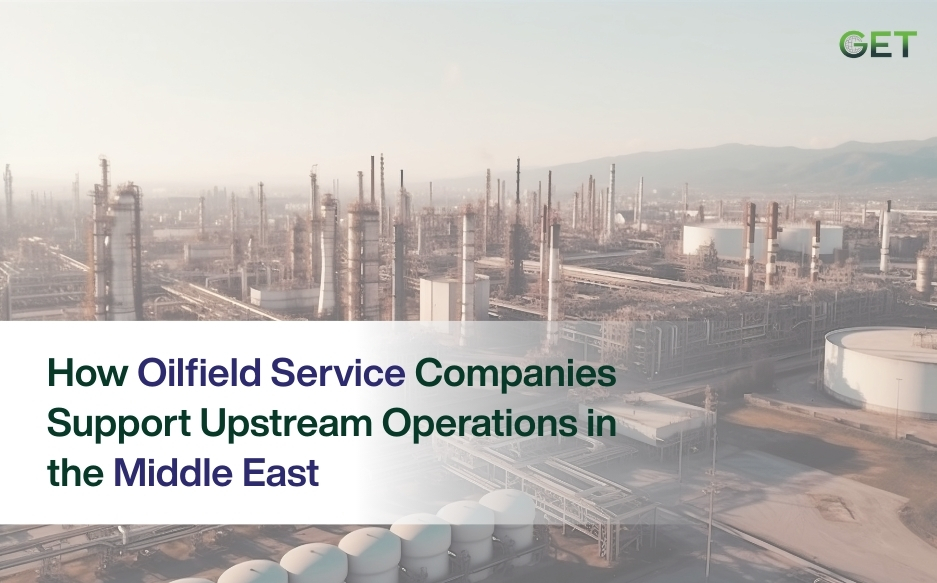
Read Also- How Oilfield Service Companies Support Upstream Operations in the Middle East
By Get global | June 30, 2026

By Get global | June 29, 2026
The oil and gas industry is complex and high-risk, making it essential for operators to select oilfield service partners based on more than just price or equipment availability. In the upstream sector—especially in the Middle East—Health, Safety, and Environmental (HSE) performance is now a key factor in decision‑making. Strong HSE […]
By Get global | June 29, 2026
By Get global | June 29, 2026
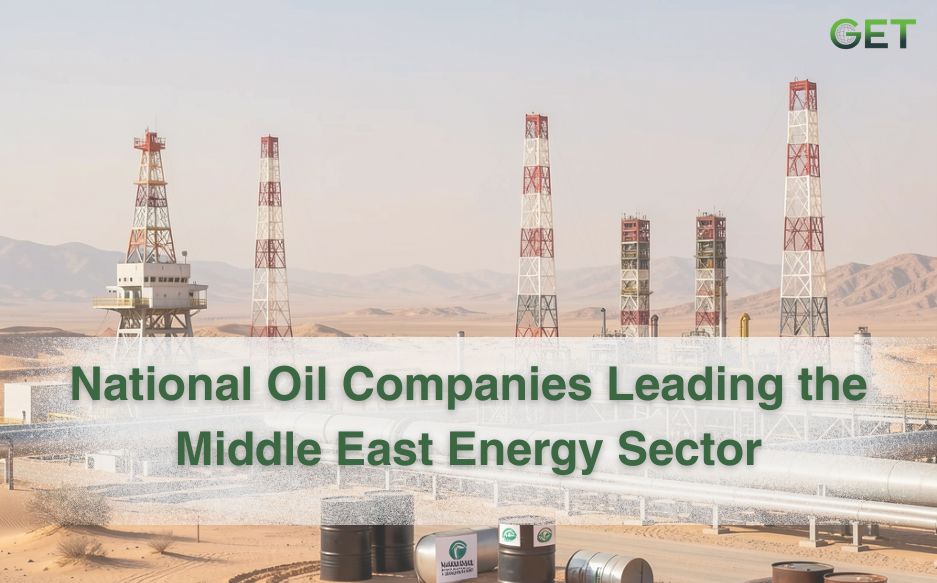
The Middle East has always been one of the key regions for the oil and gas industry with some of the largest hydrocarbon reserves in the world. Upstream exploration and production have been a major contributor to economic growth and energy development for many Middle Eastern countries. For instance, cities […]
By Get global | June 29, 2026
Every barrel counts. In oil and gas, even a few hours of unexpected downtime can cost companies thousands, sometimes millions of dollars. And yet, so many operators are still juggling dozens of vendors without any real system in place. It’s messy. It slows things down. And honestly, it’s holding production […]