Here’s something that surprises a lot of people when they first learn about it.
The oil and gas industry doesn’t just drill wells to take things out of the ground. A huge chunk of the operation is actually about putting things back in.
That’s what injection wells do. And once you understand how they work, you start to realize just how much of modern oil and gas production depends on them.
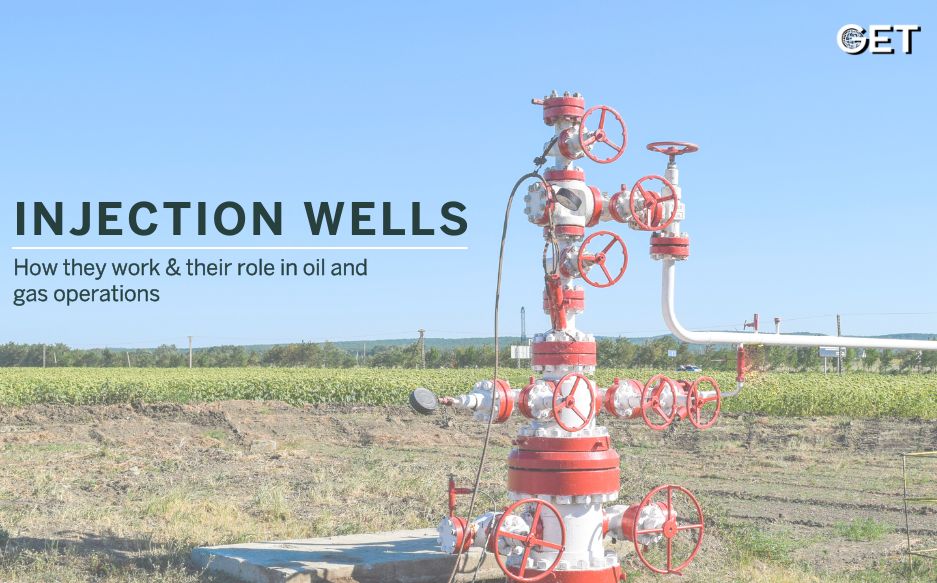
I’ve seen engineers walk past injection wellheads without giving them a second glance. They look almost identical to any other well on the pad. But underground? They’re doing some seriously heavy lifting.
Let’s get into it.
At its most basic level, an injection well is a borehole that sends fluids down into underground rock formations instead of pulling them up.
Water. Gas. Steam. Chemicals. Depending on what the operator needs, different fluids go in for different reasons.
In the oil and gas industry, injection wells typically fall into one of two camps. Either they’re helping you get more oil out of a reservoir. Or they’re safely handling the wastewater and byproducts that come along with production.
Both jobs matter enormously. Neither one is glamorous. But without injection wells doing their job quietly in the background, a lot of oilfields would be running at a fraction of their potential — or shut down entirely.
Here’s a quick way to think about it. A production well is like a straw. An injection well is like the pressure you apply to the other end of the bottle.
Okay, so the mechanics. Let’s walk through this step by step.
You drill a well into a target formation. Usually something porous — sandstone is common. Then you pump fluid down through the wellbore at controlled pressure. That fluid moves through the tiny spaces in the rock, spreading outward.
Now here’s where it gets interesting, because the injected fluid is doing one of two very different jobs depending on the type of operation.
Picture a reservoir like a sponge full of oil. When you start producing, you squeeze the sponge. Eventually, the natural pressure driving oil toward your wellbore starts to drop.
Less pressure means less flow. Less flow means less production. And in the oil and gas industry, that’s money walking out the door.
Water or gas injection replaces the volume you’ve taken out. It maintains — or even increases — the reservoir pressure. That keeps oil moving toward your production wells. This is called secondary recovery, and it can add decades to the life of a field.
Every barrel of oil that comes out of the ground brings saltwater with it. Sometimes a little. Sometimes a lot — in mature fields, you can produce ten barrels of water for every barrel of oil.
That water can’t just sit on the surface. It’s salty, often contains hydrocarbons, and needs to go somewhere safe. Disposal injection wells are the answer. The water goes back underground, deep into formations that are isolated from anything useful like freshwater aquifers.
It’s not the most exciting part of oil and gas operations. But get it wrong and you’ve got a regulatory nightmare on your hands.
The first time I visited a disposal well operation, I expected it to look industrial and dramatic. It was surprisingly quiet. Just a pump, some piping, and a wellhead. But underground, millions of gallons of produced water were finding their permanent home in rock formations thousands of feet below the surface.
Not every injection well works the same way. Here’s a breakdown of the main types you’ll encounter across oil and gas operations.
The workhorse of the bunch. Water — usually seawater offshore, or recycled produced water onshore — gets pumped into the reservoir to maintain pressure.
Waterflooding is the technical term. When it’s done well, it can push oil recovery rates from around 20% to 40% of the oil originally in place. That’s a massive difference. Fields that would have been abandoned are still producing because of water injection.
Some formations don’t respond well to water. Others are better suited to gas injection — natural gas, nitrogen, or CO₂.
CO₂ injection is worth mentioning specifically. When CO₂ gets into the reservoir, it mixes with the oil and makes it flow more easily. You produce more oil, and the CO₂ stays underground. That second part is increasingly interesting to people tracking carbon emissions in the oil and gas industry.
Heavy oil is thick. Really thick. At reservoir temperature, it barely moves. Steam injection solves this by heating the formation, which thins the oil enough to flow.
You see this a lot in oil sands operations and heavy oil fields in places like California, Canada, and Venezuela. It’s energy-intensive but effective when the geology calls for it.
Strictly for getting rid of produced water and other waste fluids. These wells go deep — sometimes more than 10,000 feet — into formations with no usable resources. The goal is permanent, safe containment.
The most advanced category. Polymers, surfactants, or alkaline solutions get injected to alter how fluids behave in the reservoir. It’s more expensive, but in the right conditions, it can squeeze out oil that water and gas simply can’t reach.
Read Also- The Complete Guide to Centrifugal Pumps: Mechanism, Types & Applications
Here’s something reservoir engineers will tell you pretty quickly: producing oil without a solid injection strategy is like spending your savings without thinking about the future.
You might do fine for a while. But eventually, you’ll wish you’d been smarter about it from the start.
In the oil and gas industry, injection programs get designed before a field even starts producing. Engineers look at the geology, the fluid properties, the well spacing. They figure out where to put the injectors, how much to inject, and at what pressure.
Get it right and you can recover 50% or 60% of the oil originally in place. Get it wrong — or skip injection entirely — and you might only ever see 20% to 25%.
On a large field, that gap represents billions of dollars and sometimes entire communities built around the assumption of long-term production.
There’s a reason the most experienced reservoir engineers at any oil and gas company are usually the ones who’ve managed injection programs. It’s where the real complexity — and the real value — lives.
This part matters more than most people realize.
In the U.S., injection wells are regulated by the EPA under the Underground Injection Control (UIC) program. The program breaks wells into six classes — Class I through VI — based on what they inject and where.
Oil and gas disposal and enhanced recovery wells typically fall under Class II. That classification comes with a real set of requirements:
Most states also have their own programs that run alongside the federal rules. In practice, operators deal with both layers of oversight.
None of this is paperwork for the sake of paperwork. A compromised injection well can contaminate drinking water sources. That’s an irreversible problem — and regulators treat it that way.
Experienced operators know this. The companies that cut corners on well integrity in the oil and gas industry don’t stay in business long.
Let’s be honest — injection wells aren’t always smooth sailing. Here are the headaches that keep operators up at night.
This one became a public conversation around 2011, when earthquake rates in states like Oklahoma started spiking. Researchers linked some of it to high-volume disposal wells in the oil and gas industry.
The mechanism isn’t the drilling itself — it’s the pressure. Injecting fluid into certain formations can reactivate old faults. The result can be small earthquakes, or occasionally larger ones.
Regulators responded with traffic light protocols — rules that tell operators to reduce or stop injection if seismic activity crosses certain thresholds. Site selection now involves a lot more geological screening than it used to.
Over time, the formation near the wellbore can plug up. Suspended solids in the injected water. Bacterial growth. Scale buildup. All of it reduces how much fluid you can pump in.
Operators spend real money on water treatment and periodic acid stimulation jobs to keep injectivity where it needs to be. It’s ongoing maintenance — not a one-time fix.
Injection water is often corrosive. It eats through steel casing over time. Scale can block perforations. Chemical inhibitors help, but the battle never really ends. It’s one of those things in oil and gas operations that requires constant monitoring rather than a permanent solution.
The regulatory landscape for injection wells in the oil and gas industry has gotten more complicated over the last decade. What was acceptable five years ago may require additional permitting or monitoring today. Operators need dedicated compliance teams — not just engineers — to stay current.
The interesting thing about injection well technology is that it’s becoming more relevant, not less, even as the energy industry evolves.
CO₂ injection for enhanced oil recovery is growing. Projects in the Permian Basin and elsewhere are using CO₂ that would otherwise enter the atmosphere to produce more oil. The carbon stays underground. It’s not a perfect solution for climate change, but it’s a real one.
Produced water management is getting smarter too. Instead of just disposing of water, more operators in the oil and gas industry are treating and reinjecting it within the same field. That reduces freshwater consumption and cuts disposal costs. In water-stressed regions like West Texas, it’s becoming standard practice.
And beyond oil and gas specifically, the subsurface injection expertise built up over decades is directly applicable to geothermal energy development, underground hydrogen storage, and large-scale carbon capture projects.
The tools and knowledge don’t disappear when an oilfield stops producing. They transfer.
If there’s one thing worth taking away from all this, it’s that injection wells are doing a lot more work than they get credit for.
They’re not a footnote in oil and gas operations. They’re often the reason a field keeps producing as long as it does. They’re why produced water doesn’t end up somewhere it shouldn’t. And increasingly, they’re part of how the oil and gas industry is trying to address its environmental footprint.
The next time you drive past an oilfield, there’s a good chance at least some of those wellheads aren’t producing at all. They’re injecting. Quietly doing their job, a few thousand feet below the surface, in formations most people will never see.
That’s worth understanding — whether you’re new to the oil and gas industry or you’ve been in it for years.
Read Also- Oil and Gas Jobs in the KSA – Current Opportunities & Career Development
By Get global | June 30, 2026

By Get global | June 29, 2026
The oil and gas industry is complex and high-risk, making it essential for operators to select oilfield service partners based on more than just price or equipment availability. In the upstream sector—especially in the Middle East—Health, Safety, and Environmental (HSE) performance is now a key factor in decision‑making. Strong HSE […]
By Get global | June 29, 2026
By Get global | June 29, 2026
The Middle East has always been one of the key regions for the oil and gas industry with some of the largest hydrocarbon reserves in the world. Upstream exploration and production have been a major contributor to economic growth and energy development for many Middle Eastern countries. For instance, cities […]
By Get global | June 29, 2026
Every barrel counts. In oil and gas, even a few hours of unexpected downtime can cost companies thousands, sometimes millions of dollars. And yet, so many operators are still juggling dozens of vendors without any real system in place. It’s messy. It slows things down. And honestly, it’s holding production […]