The oil and gas industry has always had its ups and downs, but 2025 feels like one of those years where change is coming faster than usual. Prices aren’t swinging as wildly as they were a few years ago, but that doesn’t mean things are calm. If you’re part of the upstream oil and gas industry—whether you’re sitting in a planning office or spending weeks on an oilfield rig—you’re already noticing how different the work feels compared to even five years back.
So, what exactly is shifting? Here are five things that are shaping the year ahead.
For a long time, digitalization was something people spoke about at conferences. Reality on rigs? Not so much. But now, it’s actually happening.
The recent talked about incident of a rig in Oman where predictive maintenance flagged a pump failure days before it would’ve broken down. That single alert saved the operator a week of downtime. A few years ago, that would’ve been pure luck.
In 2025, we’re seeing more rigs running with live dashboards, digital twins, and automated drilling support. It’s not everywhere yet, but it’s no longer just the big companies. Smaller players are dipping their toes in too. The rigs don’t just drill—they collect, analyze, and even suggest decisions. That’s a big shift in upstream operations.
Let’s be honest—this is the elephant in the room. Everyone in the oil and gas industry knows the energy transition is real, but no one can simply flip a switch and replace hydrocarbons. What has changed is the pressure. Investors, regulators, even clients are now asking for proof: How are you cutting emissions?
Some operators are trying hybrid rigs—mixing diesel and solar. A great budding example can be seen in Africa; not perfect, but they cut emissions enough to be noticed. The majors are going bigger with carbon capture and storage. Whether Carbon Capture and Storage (CCS) is the long-term answer or not, it at least shows movement.
If companies don’t address sustainability in 2025, they risk more than just criticism—they risk contracts. Buyers and governments are starting to factor emissions into their decisions.
Ask anyone who’s been on an oilfield rig for 20+ years, and they’ll tell you the crews look different now. You still have drillers and supervisors, but you’re also seeing young engineers watching screens full of analytics data.
The real challenge? Bridging the two worlds. Experienced workers know the rigs inside out, but may not be comfortable with automation or AI tools. Younger talent understands the tech but lacks field experience. Neither group alone is enough.
That’s why training has become such a big focus. SLB and Halliburton are rolling out digital upskilling globally. Smaller operators are starting in-house programs. It’s not perfect, but the industry doesn’t have a choice. Without blending old skills with new, upstream operations simply won’t function.
One lesson nobody forgot after COVID: supply chains break. And when they break in oil and gas, projects stall, costs skyrocket, and rigs sit idle.
This year, companies are playing it safer. Some are stockpiling critical spares, others are diversifying suppliers so they’re not dependent on one country or region. A few are even testing AI-based systems that predict when and where shortages might happen.
Is it more expensive? Yes. But so is a rig waiting on a part that’s stuck in customs. In 2025, “just in case” planning is replacing “just in time.”
Safety has always been a core value in the oil and gas industry, but now technology is changing how it’s done.
Take drones. A decade ago, flare stack inspections meant putting people in dangerous conditions. Today, drones do it in minutes. Robots are starting to take over tasks like tank cleaning or valve inspections. And in some places, rigs are monitored remotely, with teams controlling operations from miles away.
This doesn’t mean fewer jobs—it means different jobs. Less time in hazardous zones, more time behind screens. It’s safer and, often, cheaper.
What is in store and what can be done to match the pace
So, where does that leave us in 2025? If there’s one common thread, it’s adaptability. The upstream oil and gas industry isn’t disappearing, but it’s definitely changing. Technology is creeping deeper into the rig floor. Sustainability is no longer just for the annual report—it’s part of contract negotiations. Supply chains are being rebuilt. Crews are learning new skills. And safety is being redefined by machines and remote tools.
Will every company get it right this year? No. Some will move faster, some slower, and a few may resist entirely. But if history tells us anything, it’s that this industry doesn’t stand still for long.
2025 may not be easy, but then again, oil and gas has never been an easy business. It’s about resilience. It’s about solving problems in the toughest conditions. And in that sense, nothing has changed.
Read Also- Kuwait’s Digital Future: How Tech Is Shaping Oilfield Operations
By Get global | June 30, 2026
By Get global | June 29, 2026
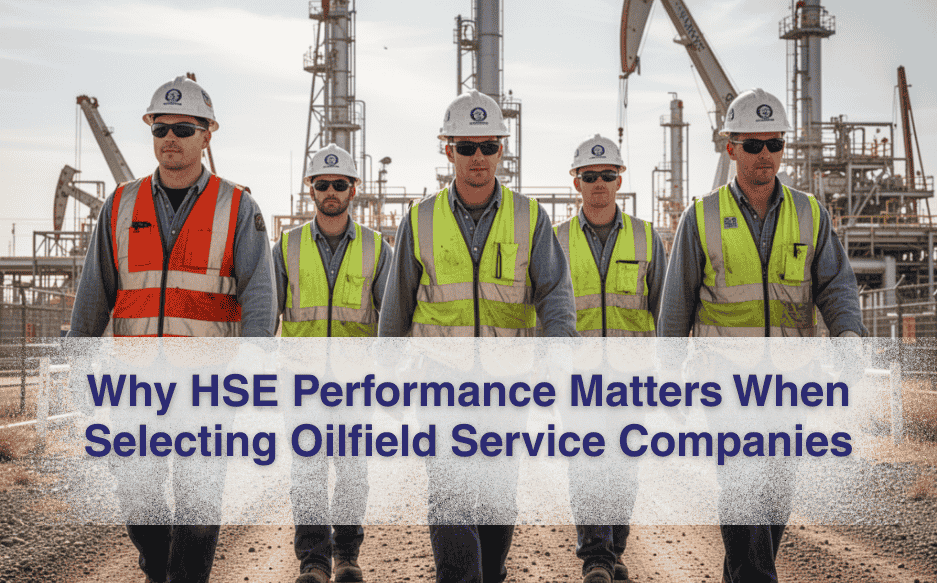
The oil and gas industry is complex and high-risk, making it essential for operators to select oilfield service partners based on more than just price or equipment availability. In the upstream sector—especially in the Middle East—Health, Safety, and Environmental (HSE) performance is now a key factor in decision‑making. Strong HSE […]
By Get global | June 29, 2026
By Get global | June 29, 2026
The Middle East has always been one of the key regions for the oil and gas industry with some of the largest hydrocarbon reserves in the world. Upstream exploration and production have been a major contributor to economic growth and energy development for many Middle Eastern countries. For instance, cities […]
By Get global | June 29, 2026
Every barrel counts. In oil and gas, even a few hours of unexpected downtime can cost companies thousands, sometimes millions of dollars. And yet, so many operators are still juggling dozens of vendors without any real system in place. It’s messy. It slows things down. And honestly, it’s holding production […]